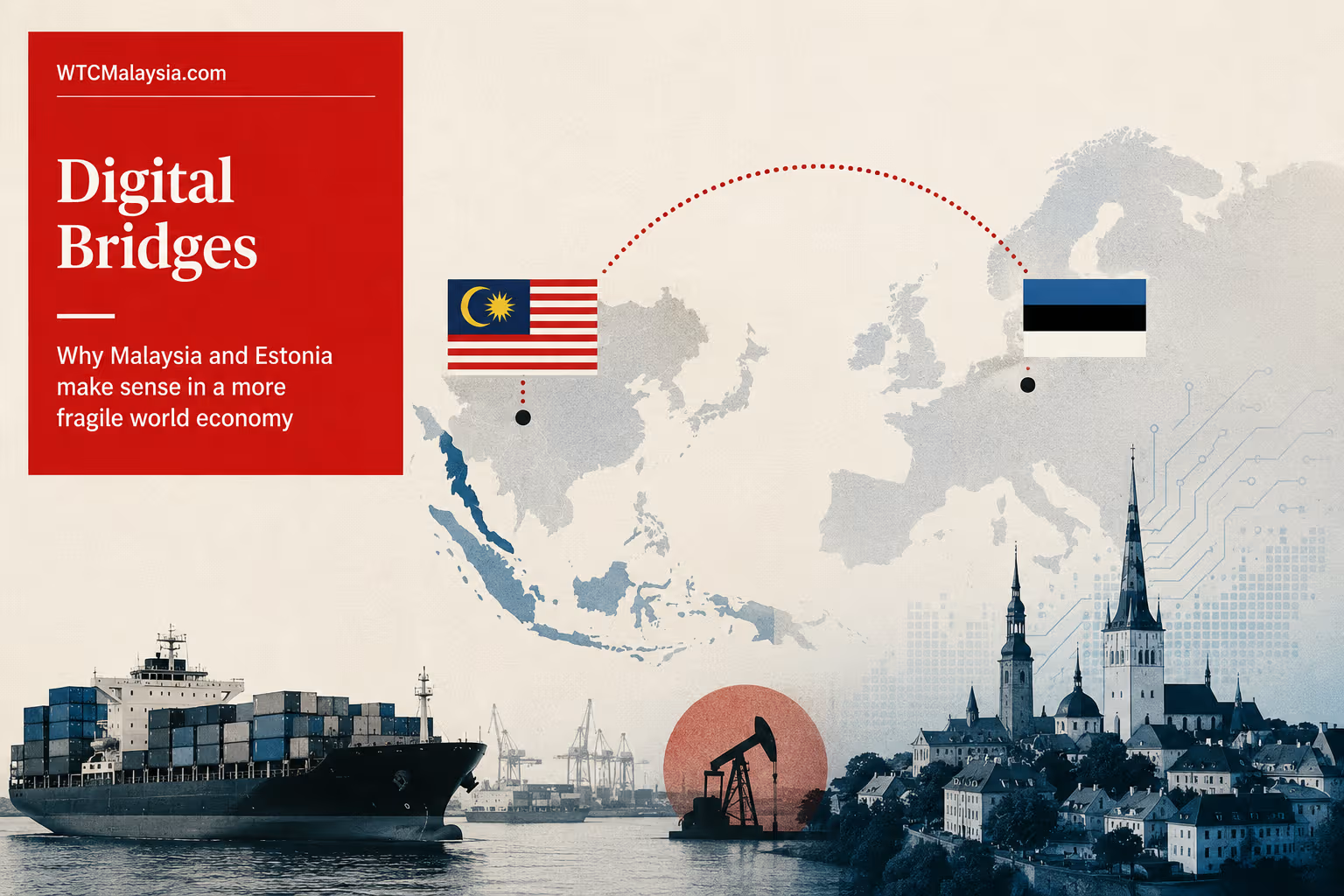
Malaysia and Estonia are not natural economic partners. One is a manufacturing hub in Southeast Asia; the other, a Baltic state better known for digital governance than industrial scale. Trade between them remains modest. Geography does not help.
Yet relationships like this are becoming more relevant precisely because they are small.
For decades, global trade was built around concentration. Countries relied heavily on a handful of markets, shipping corridors and energy routes. That model now looks less secure. The pandemic exposed logistical vulnerabilities; geopolitical tensions exposed strategic ones. The latest disruption has come from the Middle East, where instability around the Strait of Hormuz and renewed pressure on Red Sea shipping routes have pushed energy prices higher and increased shipping costs across Asia–Europe trade corridors.
For Europe, the consequences extend beyond fuel prices. Longer shipping routes, insurance surcharges and supply-chain uncertainty are forcing governments and businesses to reassess economic exposure. Asian manufacturing economies are feeling similar pressures, particularly those dependent on stable maritime trade flows. Malaysia has already warned of higher shipping costs and inflationary risks linked to disruptions around Hormuz and the wider Middle East corridor.
In that environment, Malaysia and Estonia begin to make more sense.
The relationship itself is uncomplicated. Malaysia exports electronics, machinery-related goods, rubber products and palm-oil derivatives. Estonia exports technology-related products, communications equipment and digital solutions. There is little overlap and therefore little friction.
More importantly, the relationship reflects where both economies are heading rather than where they have been.
Estonia has spent much of the past two decades building one of Europe’s most digitised states. Public services operate largely online. Digital identity systems are deeply integrated into governance. The country’s reputation now rests less on size than on efficiency.
Malaysia’s priorities are different but increasingly compatible. The country continues to position itself as a regional manufacturing and technology hub while pushing deeper into the digital economy. As Southeast Asian economies modernise, Estonia’s experience in cybersecurity, digital infrastructure and e-governance becomes more relevant than trade volume alone would suggest.
The wider geopolitical environment strengthens this logic. European firms are increasingly searching for reliable production partners outside traditional concentration points, particularly as shipping disruptions and energy volatility complicate trade between Europe and parts of the Middle East. Malaysia’s established industrial ecosystem and export capacity make it an increasingly attractive option within Southeast Asia.
Estonia, meanwhile, offers something Malaysia often seeks in Europe: access. Though small, it remains deeply integrated into the European Union’s regulatory and commercial system. For Malaysian firms looking outward, that carries value.
None of this suggests a dramatic transformation in bilateral trade. Distance still raises logistical costs. Business familiarity remains limited. Larger economies will continue to dominate attention on both sides.
But trade relationships are no longer judged purely by scale. Increasingly, they are judged by strategic usefulness.
That is where smaller partnerships gain importance. Digital cooperation, cybersecurity, green technology and supply-chain diversification are no longer peripheral concerns; they sit closer to the centre of economic policy. Malaysia and Estonia happen to share interests in all four.
In a less stable trading environment, functionality matters more than size. Countries do not always need to become major partners to become useful ones.