17 October 2026 · Kuala Lumpur
YB Senator Dr. Jufitri Joha, President of World Trade Chamber Malaysia (WTCM), delivered the closing keynote address at the Annual Women Economic Forum and G100 Global Meet 2026, held from 14 to 17 October 2026 at the International Youth Centre in Kuala Lumpur.
Convened under the theme “Powering the Future: Empowering Communities and Cultures of Care, Co-Existence, Creativity & Commerce Through Women-Led Development”, the international gathering brought together approximately 400 delegates, 77 speakers and nine moderators from 17 countries.
The forum provided an important platform for women leaders, entrepreneurs, policymakers, institutional representatives and development partners to exchange knowledge, strengthen international relationships and explore practical partnerships across business, community development and sustainable economic participation.
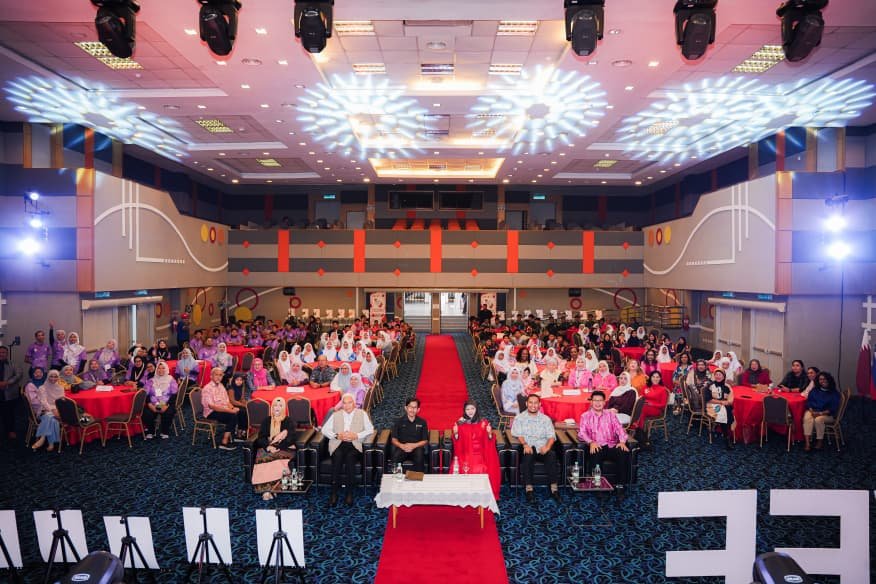
In his closing address, YB Senator Dr. Jufitri highlighted women-led development as an essential component of stronger families, more resilient communities and inclusive economic progress. He called for international dialogue to be translated into measurable outcomes—including greater access to capital, technology, markets, mentorship and cross-border opportunities for women-led enterprises.
He also positioned Malaysia as a natural bridge connecting ASEAN with international markets, investment networks and institutional partners. Reflecting WTCM’s role as a non-profit strategic chamber, the address emphasised responsible commerce, international cooperation and the creation of opportunities that deliver meaningful benefits to businesses and communities.
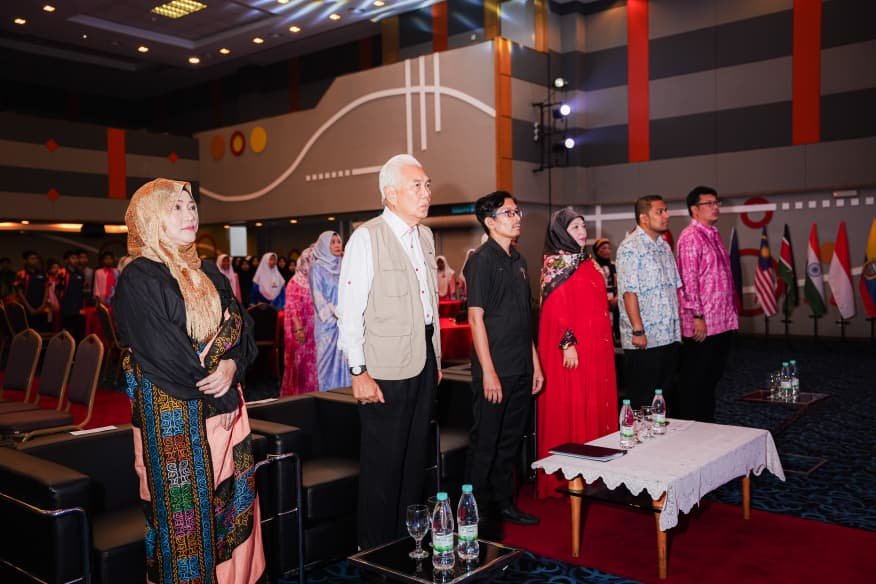
The following is the prepared text of the closing keynote address.
Closing Keynote Address
By YB Senator Dr. Jufitri Joha
President, World Trade Chamber Malaysia
Annual Women Economic Forum and G100 Global Meet 2026
14–17 October 2026 | International Youth Centre, Kuala Lumpur
Theme: “Powering the Future: Empowering Communities and Cultures of Care, Co-Existence, Creativity & Commerce Through Women-Led Development”
Bismillahirrahmanirrahim.
Assalamualaikum warahmatullahi wabarakatuh,
Salam Sejahtera,
Salam Malaysia MADANI,
and a very good day to everyone.
YBhg. Datin Dr. (H.C.) Hartini Osman, Organising Chairperson of the Annual WEF and G100 Global Meet 2026; member of the WEF Advisory Board; Chairman of Yayasan Bina Kesejahteraan; G100 Global President 2026; G100 Global Chair for Philanthropy, Business and Poverty Eradication; and President of WEF ASEAN.
Distinguished leaders of the Women Economic Forum and G100 Club;
Excellencies, Ambassadors and High Commissioners;
Distinguished speakers, moderators, delegates, business leaders, representatives of our partner organisations, ladies and gentlemen, and friends from across the world.
It is both an honour and a privilege to stand before you as we bring the Annual Women Economic Forum and G100 Global Meet 2026 towards the conclusion of this important international gathering.
First and foremost, I wish to congratulate the organising committee, led by Datin Dr. (H.C.) Hartini Osman, together with the entire organising team, strategic partners, volunteers and supporters, for their relentless dedication and commitment in making this gathering possible.
This year’s event has brought together approximately 400 delegates, 77 speakers, nine moderators and participants from 17 countries, creating a valuable platform for dialogue, knowledge-sharing, international cooperation and new partnerships.
These numbers represent more than the scale of an event. They represent the coming together of ideas, experiences, cultures and ambitions, united by a common belief that we can build a better future through collaboration and purposeful leadership.
To the international delegates, despite the haze, thank you for choosing Kuala Lumpur as a place to share your knowledge, strengthen friendships and explore new opportunities. I hope your time in Malaysia has helped you feel part of a shared global mission and opened the way to lasting partnerships.
Recognising the Organisers and Responsible Leadership
Ladies and gentlemen,
I understand that the Networking Evening Tea and Cultural Programme held on 14 October 2026 was successfully conducted, bringing together distinguished guests, international delegates and local participants in an atmosphere of friendship, cultural appreciation and fellowship.
The programme was an important reminder that international relationships are strengthened not only through formal meetings and conference sessions, but also through meaningful conversations, cultural exchanges and the human connections we establish with one another.
“You can retire from a job, but don’t ever retire from making extremely meaningful contributions in life.” — Stephen Covey
Culture allows us to appreciate our differences. Networking enables us to discover common interests, and fellowship reminds us that, despite our different backgrounds, we share a common aspiration for peace, prosperity and human dignity.
Congratulations to the organisers and everyone who contributed to the success of this memorable evening.
At the same time, I would like to acknowledge the necessary decision to postpone the Run for Hope programme, which was scheduled to take place this morning, due to the heavy haze and unsuitable outdoor air conditions. According to live data from IQAir’s World Air Quality Ranking, Singapore ranked as the world’s most polluted major city with a US AQI⁺ of 223, followed by Medan, Indonesia, at 189 and Kuala Lumpur, Malaysia, at 189.
While Run for Hope was intended to unite our communities in raising awareness and demonstrating solidarity in conjunction with the global commitment to eradicating poverty, the health and safety of our participants must always come first.
The run may be postponed, but our commitment to eradicating poverty must never be postponed.
Our responsibility to support vulnerable communities, expand economic opportunities and ensure that no one is left behind or forgotten continues regardless of the circumstances.
This is precisely what our conference theme calls upon us to practise—not merely to speak about care and empowerment, but to demonstrate them through our decisions and actions.
Powering the Future: A Shared Responsibility
Ladies and gentlemen,
The theme, “Powering the Future: Empowering Communities and Cultures of Care, Co-Existence, Creativity and Commerce Through Women-Led Development”, is both timely and profoundly important.
We are living in a world of extraordinary possibilities, but also considerable uncertainty. According to Ziauddin Sardar, we live in post-normal times comprising three Cs: chaos, complexity and contradictions. The futurist describes post-normal times as a transitional era in which old certainties are dying, new ones have not yet emerged and traditional problem-solving no longer works.
Economic pressures, geopolitical tensions, energy crises, technological disruption, artificial intelligence, climate challenges and social inequalities continue to affect communities across borders.
In such a world, leadership cannot be defined solely by authority, wealth, title, following or influence. Leadership must be defined by our capacity to bring people together, solve problems, create opportunities and leave no community behind. As a politician, I believe politics is about serving the public good.
This is where women-led development becomes essential.
الأُمُّ مَدرَسَةٌ إِذا أَعدَدتَها
أَعدَدتَ شَعباً طَيِّبَ الأَعراقِA mother is a school; if you prepare her well,
you prepare a people of noble stock.
This Arabic proverb illustrates the vital, overarching role of women—as mothers—in nation-building.
When women are empowered to participate fully in the economy, they do not merely improve their own circumstances. They strengthen families, build businesses, create employment and contribute to more resilient societies.
Women are entrepreneurs, innovators, investors, educators, professionals, community builders and decision-makers. They are not simply participants in the economy. They are among the people shaping its future.
According to the Department of Statistics Malaysia, in 2024, about 57 out of every 100 working-age women participated in the labour force, compared with 83 out of every 100 working-age men. This gap represents talent and potential that we must do more to unlock.
Yet empowerment must go beyond recognition and representation.
Empowerment means access to opportunity, capital, markets, technology and the decision-making tables where the future is determined.
It means creating an environment in which women can transform ideas into enterprises, enterprises into sustainable businesses, and businesses into engines of economic and social progress.
It also means ensuring that the next generation of women leaders will not have to overcome the same barriers faced by previous generations. That is the future we must build together.
For Malaysia, this ambition has a clear policy foundation. Our National Women’s Policy and Women’s Development Action Plan 2025–2030 place the economy, leadership, safety and well-being at the centre of women’s advancement. The Action Plan includes a target of 60 per cent female labour force participation. These priorities give us a common language for working with partners internationally: women must be able to earn, lead and contribute in conditions of safety and dignity.
I see a practical role for our business community in helping translate this national direction into opportunities that women can use, here in Malaysia and with our partners abroad.
Four Pillars, One Common Purpose
Ladies and gentlemen,
This forum’s theme offers four powerful guiding principles: care, co-existence, creativity and commerce. These are not separate ambitions. They are interconnected foundations for a sustainable and inclusive future.
First, the culture of care
Economic progress must never come at the expense of human dignity. A strong economy must also be a caring economy—one that recognises the value of families, communities, health, education and the care economy itself.
We must recognise that caring for children, older persons, persons with disabilities and vulnerable communities is fundamental to the functioning of society.
The International Labour Organization estimated that, in 2023, 708 million women worldwide were outside the labour force because of unpaid care responsibilities. Affordable, quality childcare and support for older persons therefore belong at the heart of economic policy. When we make care more accessible and share its responsibilities more fairly, we widen women’s choices.
Care is not a weakness. Care is an economic and social strength.
A nation that invests in the well-being of its people invests in its own future. In his book The Asian Renaissance, the Prime Minister frequently discusses the concepts of human dignity, justice, good governance and a human-centric economy—a vision he has since translated into numerous national policies and annual budgets.
Second, the culture of co-existence
In an interconnected world, our differences should not become permanent barriers to cooperation. God created a diversity of peoples so that we may come to know one another and cooperate with each other. In Chapter 49, verse 13 of the Quran, Allah says:
يَـٰٓأَيُّهَا ٱلنَّاسُ إِنَّا خَلَقْنَـٰكُم مِّن ذَكَرٍ وَأُنثَىٰ وَجَعَلْنَـٰكُمْ شُعُوبًا وَقَبَآئِلَ لِتَعَارَفُوٓا۟ ۚ إِنَّ أَكْرَمَكُمْ عِندَ ٱللَّهِ أَتْقَىٰكُمْ ۚ إِنَّ ٱللَّهَ عَلِيمٌ خَبِيرٌ
“O humanity! Indeed, We created you from a male and a female, and made you into peoples and tribes so that you may get to know one another. Surely the most noble of you in the sight of Allah is the most righteous among you. Allah is truly All-Knowing, All-Aware.”
Our countries may have different languages, traditions, religions and economic structures. Nevertheless, we share a common responsibility to promote peace, mutual respect and human dignity—and certainly not war, as we have witnessed in Palestine and Ukraine.
Co-existence requires more than tolerating one another. It requires the willingness to listen, understand, negotiate and work together.
Through platforms such as WEF and G100, we can build bridges between communities, institutions and nations globally. Let us make our diversity a source of strength and our international relationships a foundation for peace and prosperity.
Third, the culture of creativity
The future belongs to those who can imagine new solutions to old problems.
We must encourage women and young people to embrace innovation, digital transformation, artificial intelligence, sustainable technologies and new business models. However, innovation must not become a privilege reserved for a select few.
Entrepreneurs from rural communities, small businesses, emerging markets and underserved populations must have the knowledge, tools and opportunities to participate in the digital economy.
Let us move beyond asking whether our communities can adapt to change. Let us equip them to lead change.
Fourth, the culture of commerce
As President of World Trade Chamber Malaysia, a non-profit initiative under my Senator’s Office to facilitate business networking, I believe commerce must be recognised as a powerful instrument for connecting people, creating prosperity and advancing inclusive development.
Trade is more than the movement of goods and services. It is the movement of ideas, skills, technology, investment and opportunity across borders.
Women-led enterprises must be better connected to regional and international markets. Small and medium-sized enterprises must have greater opportunities to access financing, develop their capabilities, participate in supply chains and establish cross-border partnerships.
Malaysia’s Economic Census 2023 recorded more than 219,000 women-owned establishments in 2022, generating RM61.4 billion in value added. Women are already creating substantial economic value. Our task is to help more of these enterprises grow, with access to working capital, export knowledge and buyers who can become lasting customers.
We must build stronger connections between entrepreneurs, chambers of commerce, financial institutions, governments, investors and development organisations.
Let us ensure that women with innovative products can reach new markets, entrepreneurs can access the capital they need, and communities with untapped potential can become active contributors to economic growth.
Care gives development its humanity. Co-existence gives it peace. Creativity gives it momentum. Commerce gives it economic strength. Together, they can power a future that is more inclusive, resilient and prosperous.
From Dialogue to Action
Distinguished delegates,
As we reflect on the discussions and connections established during this gathering, I wish to offer three practical commitments for our collective consideration.
First, let us build partnerships that produce measurable results.
We have exchanged ideas, shared experiences and discovered common interests. Now, let us turn those connections into action.
Let us develop partnerships between women entrepreneurs and investors, local enterprises and international markets, community organisations and development institutions, and established leaders and emerging talent.
Every meaningful connection should open the possibility of a new opportunity. Every commitment should have a pathway towards implementation.
Second, let us expand economic opportunities for women and communities.
We must work towards a future in which women-led enterprises have improved access to financing, mentoring, technology, procurement opportunities and international trade networks.
We must strengthen entrepreneurship at the grassroots level while supporting businesses that are ready to grow regionally and globally.
We must also invest in young people, because today’s youth are tomorrow’s business leaders, innovators, policymakers and community builders.
Our ambition should not be limited to celebrating successful women. Our ambition must be to create the conditions in which millions more women can succeed.
Third, let us measure our success through impact.
Let us ask ourselves not only how many delegates attended, how many speeches were delivered or how many photographs were taken.
Let us also ask how many new business partnerships were established, how many entrepreneurs gained access to markets, how many women acquired new skills, how many young people received meaningful opportunities, and how many communities benefited from our collective efforts.
Impact requires accountability. Progress requires continuity. Transformation requires sustained commitment.
The true legacy of this gathering will be determined by what we implement in the months and years ahead.
Eradicating Poverty: A Mission We Must Continue
Ladies and gentlemen,
Poverty eradication is not merely a government responsibility. It is a shared responsibility involving the private sector, civil society, foundations, international organisations, communities and individuals.
Today, we are also discussing multidimensional poverty. As a policymaker, we use our Localised Multidimensional Poverty Index to understand poverty as something caused not only by income, but also by factors including education, health, living standards, social security and social cohesion.
We cannot speak about empowering communities without addressing the barriers that prevent people from accessing education, employment, capital, healthcare and economic opportunity.
We cannot speak about inclusive development while vulnerable families remain excluded from the benefits of economic growth.
And we cannot speak about women-led development without recognising the role women play in lifting families out of poverty, sustaining livelihoods and building stronger communities.
Our commitment must therefore go beyond charity alone. We must create sustainable pathways for people to improve their own circumstances.
We must empower women to establish and expand businesses, equip young people with relevant skills, strengthen community-based enterprises and connect underserved populations to wider economic opportunities.
This is how we transform assistance into empowerment, empowerment into economic participation, and economic participation into lasting progress.
Let us remember: poverty is not eradicated through sympathy alone. It requires opportunity, investment, inclusion and sustained collective action.
When we create opportunities for one woman, we may strengthen an entire family. When we support one community enterprise, we may generate employment for many households. And when we build inclusive economic systems, we create the conditions for entire communities to prosper.
Malaysia as a Bridge to the World
Ladies and gentlemen,
Malaysia is proud to be a meeting point for cultures, civilisations, ideas, trade and international cooperation.
Our experience as a diverse, outward-looking economy provides an important platform for building relationships across ASEAN and the wider international community.
Through WEF, G100 and our wider network of business and development partners, we have opportunities to strengthen cooperation across borders and support a more inclusive global economy.
Let us connect Malaysian entrepreneurs with international markets.
Let us connect ASEAN’s economic dynamism with global investment and innovation.
Let us connect the experience of established leaders with the aspirations of the next generation.
And let us connect the language of empowerment with the practical realities of jobs, income, enterprise development and improved livelihoods.
As World Trade Chamber Malaysia, we recognise the importance of fostering an environment in which business becomes a constructive force for inclusive growth and international partnership.
Our message to the world is clear: we welcome collaboration, we value diversity, and we believe that prosperity is stronger when more people have the opportunity to contribute to it.
A Message to the Next Generation of Leaders
To the women leaders in this room, I say: continue to lead with courage, integrity and purpose.
Do not underestimate the power of your ideas, the strength of your networks or the influence of your actions.
To the entrepreneurs and business leaders, I say: build enterprises that are commercially successful and socially responsible. Let profitability and purpose reinforce one another.
To our young people, I say: do not wait for the future to be handed to you. Prepare yourselves to shape it.
Learn continuously. Embrace innovation. Respect different perspectives. Build relationships across cultures. And have the courage to turn your ambitions into meaningful action.
To our international delegates, let the friendships established here continue beyond geographical boundaries. Let us remain connected, continue our conversations and find practical ways to work together.
And to everyone who has contributed to this gathering, remember that leadership does not always begin with a grand platform.
Sometimes, it begins with a single decision to help someone, an idea to solve a problem, a partnership that creates an opportunity, or the courage to challenge a barrier that should never have existed.
Never underestimate what collective action can achieve.
The Future Is a Commitment
Distinguished guests, ladies and gentlemen,
As we bring the Annual WEF and G100 Global Meet 2026 towards its conclusion, let us remember that the future is not something we simply wait for.
The future is something we build—through our choices, our partnerships and our willingness to act.
We must build a future where women are not merely invited into economic development but are empowered to lead it.
A future where communities are not left behind but equipped to thrive.
A future where cultures coexist in mutual respect.
A future where creativity is encouraged, innovation is accessible and commerce creates opportunities for all.
And a future where leadership is measured not by how much we accumulate for ourselves, but by how much progress we create for others.
Let us leave this gathering with more than inspiration. Let us leave with renewed determination.
Let us leave with more than contacts. Let us leave with commitments.
Let us leave with more than declarations. Let us leave with an action agenda.
And let us leave with the conviction that when women lead, communities are empowered, and when communities are empowered, nations become stronger.
On behalf of World Trade Chamber Malaysia, I congratulate Datin Dr. (H.C.) Hartini Osman, the organising committee, strategic partners, speakers, moderators, volunteers and all participants on the successful convening of this important international gathering.
May the relationships established here grow into enduring partnerships. May the ideas exchanged here inspire practical solutions. And may the work we undertake together create a lasting legacy for women, young people, businesses and communities across the world.
Let us power the future—not for a privileged few, but for the many.
Let us empower women—not only in words, but through resources, opportunities and meaningful leadership.
And let us build a world in which care, co-existence, creativity and commerce work together to advance peace, dignity and shared prosperity.
The conference may be coming to a close, but our mission is only beginning.
Together, let us turn vision into action, partnership into progress, and empowerment into lasting impact.
Let us power the future. Let us lead with purpose. Let us build a better world—together.
Thank you.